
When back pain keeps returning
It can be frustrating when your back begins to feel better, only for discomfort to return during a busy week, a training session or an ordinary task.
Recurring pain does not automatically mean that you are repeatedly damaging your back or that your spine is deteriorating. It does mean that the pattern deserves attention, particularly if symptoms are changing or affecting what you can do.
Recurrent episodes involve symptoms returning after a period of improvement or recovery. Persistent pain continues over time; symptoms lasting three months or more are commonly described as chronic. Some people experience fluctuations in ongoing pain rather than clearly separate episodes. These descriptions say something about time, not the underlying cause. 1, 3
Many presentations are described as nonspecific because assessment does not identify a single disease or structure that adequately explains the pain. Other presentations involve nerve irritation, injury, inflammatory disease or another medical condition. The same advice will not suit all of them.
Understanding your lower back
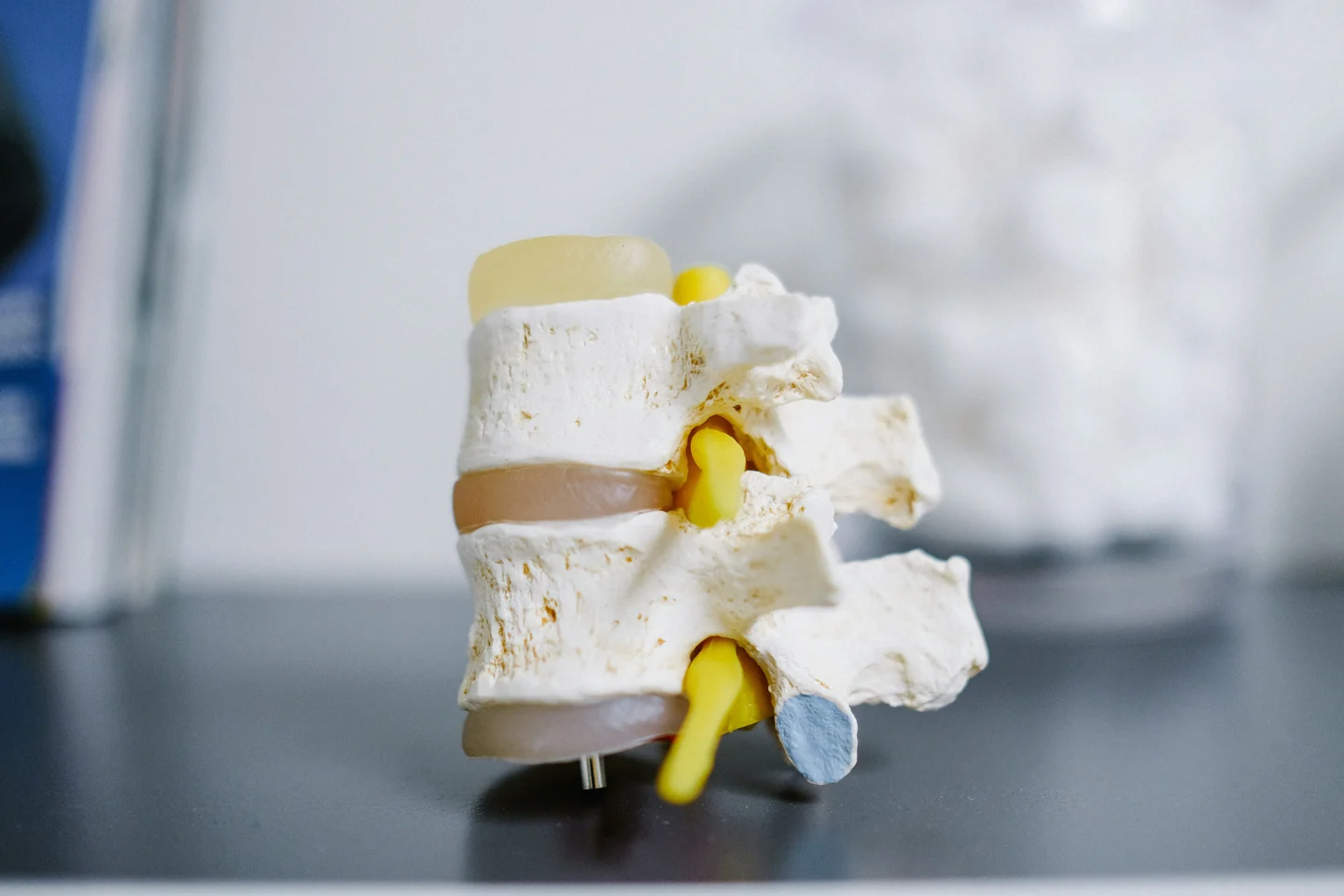
Your lumbar spine is the lower part of your spine, above the pelvis. Its five vertebrae work with several other structures to support you and allow movement.
- Intervertebral discs sit between the vertebral bodies. Their outer fibrous layers and softer centres help distribute load while allowing movement.
- Facet joints at the back of the vertebrae help guide and accommodate spinal movement.
- Muscles and connective tissues, including ligaments and fascia, contribute to support, movement and the ability to manage physical demands.
- Nerves pass through the spinal canal and openings between vertebrae, carrying signals involved in sensation and muscle function.
These structures work together during bending, reaching, walking and lifting. An anatomical model helps show their relationship, but it cannot tell you which structure, if any, is responsible for your symptoms. Pain location alone cannot reliably make that distinction. 1, 8
Why does lower back pain keep coming back?
There is rarely one explanation that applies to everyone. Useful questions concern what has changed, what currently feels difficult and how well you have returned to the activities that matter to you.
Changing demands and activity tolerance
A sudden increase in training, a day of repetitive lifting or a return to demanding exercise can expose you to more activity than you have recently managed. Symptoms may also follow an unusually long period in one position.
The demands of an activity can temporarily exceed your current tolerance without your spine being inherently fragile. Equally, pain after activity does not prove that loading is the only contributing factor.
What happened after the previous episode?
Pain settling and being ready for every previous demand are not always the same thing. You may have returned to work but still be avoiding lifting, running or particular movements.
Restoring strength, confidence and activity tolerance can be part of recovery. Recurrence is not evidence that you failed to rehabilitate properly, but reviewing the gap between your current activity and your goals can help plan the next steps. 2, 5
Movement sensitivity
Bending, sitting, extending or lifting can become uncomfortable. Changing the range, position, duration or load may make an activity more manageable while you rebuild tolerance.
A painful movement is information to assess, not automatic proof that the movement is inherently dangerous. Posture, a supposedly weak core, a tight psoas or pelvic alignment should not be treated as the default explanation.
Sleep, stress and wider health
Poor sleep, stress and other health difficulties can affect the experience of pain and the ability to recover or remain active. Pain can also disrupt sleep and increase worry. Recognising these interactions does not mean your symptoms are imaginary or primarily psychological. 3, 12
An assessment should also consider nerve-related symptoms, inflammatory conditions, trauma and other medical explanations. New symptoms should not simply be attributed to an old episode. 1
Is a disc bulge causing your pain?
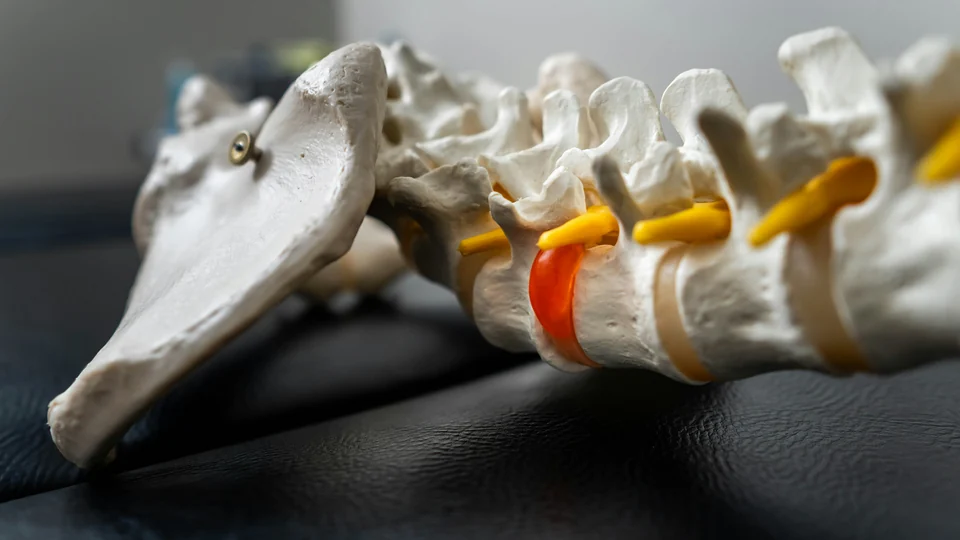
A disc bulge describes disc tissue extending beyond its usual boundary. Degeneration describes changes in a disc's structure, such as its water content or height. These imaging terms are not, by themselves, a diagnosis of the source of pain.
The phrase “slipped disc” can be misleading: the whole disc has not simply slipped out of place. Disc tissue can protrude or herniate, and sometimes irritate or compress a nearby nerve. In an appropriate clinical presentation, that can be relevant to back or leg symptoms. 8
However, a systematic review by Brinjikji and colleagues found disc degeneration, bulging and other imaging findings in people without pain, with many findings becoming more common with age. A scan finding cannot automatically explain an individual's symptoms. Nor does this mean that disc findings never matter. 4
The useful question is whether the imaging, symptom pattern and examination findings fit together and whether the result would change care.
NICE does not recommend routine imaging for low-back pain or sciatica in a non-specialist setting. Imaging can be appropriate when a specific condition is suspected or, in specialist care, when it is likely to change management. 1
What does the pattern of your symptoms tell you?
Patterns can guide an assessment and help you plan activity, but they do not independently identify a painful structure or establish a diagnosis.
After sitting, bending or lifting
Notice whether symptoms depend on how long you sit, how far you bend or how much you lift. Breaking up prolonged sitting, reducing a load or practising a smaller range may help identify a more tolerable starting point.
There is no single sitting position or lifting posture that everyone must maintain. A position that currently feels easier can be useful without becoming a permanent rule about how your back must move.
Morning stiffness or pain after training
Brief stiffness after rest is different from a persistent pattern of marked morning or night symptoms. Keep track of how long stiffness lasts, whether activity or rest changes it, and whether the pattern is changing.
Back pain after running or training may relate to the overall demands of the session, recent activity and recovery. It does not independently identify a disc problem. Persistent night pain or an inflammatory pattern, such as prolonged morning stiffness that improves with activity rather than rest, warrants discussion with a GP. 6, 11
Pain into the buttock or leg
Pain can be felt beyond the lower back without necessarily coming from a compressed nerve. Pain travelling into the leg with tingling, numbness or weakness can raise concern about nerve involvement and should be assessed.
Sciatica describes symptoms associated with irritation or compression of the sciatic nerve or its nerve roots. It should not be diagnosed from a pain-location checklist alone. New or worsening weakness and the emergency symptoms described below require prompt action. 7
Should you rest when your lower back hurts?
Temporarily reducing a particularly aggravating activity is different from stopping all activity. For routine nonspecific low-back pain, remaining active within your tolerance is generally preferable to prolonged bed rest. 6
You might shorten a walk, break a task into smaller parts or temporarily reduce training intensity. The aim is to find manageable activity, not to prove that you can push through severe pain.
A short period of relative rest during a flare can sit alongside gentle movement and a gradual return to ordinary tasks. If activity causes a substantial deterioration, symptoms keep escalating or your ability to function is falling, seek advice rather than repeatedly testing the same activity.
New neurological symptoms, significant trauma or signs of systemic illness need assessment before an exercise plan is assumed to be appropriate.
What actually helps recurring lower back pain?
Exercise can help improve function and manage symptoms, particularly in chronic nonspecific low-back pain. Guidelines support several options, including strengthening, endurance work, movement practice and aerobic activity. The evidence does not establish one exercise type as universally superior. 2, 3
The strongest programme for an individual is not necessarily the most complicated. It should match the clinical presentation, starting capacity, preferences and activities they want to return to.
Before trying these examples
The doses below are educational illustrations, not individually prescribed programmes or the exact protocols used in the cited studies. They are not a compulsory sequence. Evidence about chronic primary or nonspecific pain should not be applied indiscriminately to a new acute episode, sciatica, a fracture or another specific condition.
Do not start these exercises instead of seeking help for new bladder or bowel changes, altered genital or anal sensation, progressive leg weakness, significant trauma or feeling markedly unwell with back pain. See the medical-help section for the appropriate action.
A. Movement and mobility
Gentle cat-camel movements, pelvic tilts, comfortable trunk rotations and gradual practice of bending can offer manageable ways to explore movement. The aim is to become more comfortable with a useful range, rather than to force a stretch or reposition a disc.
For example, on hands and knees, a cat-camel movement involves slowly rounding and easing the back in the opposite direction within a comfortable range. A pelvic tilt can be tried lying on your back with knees bent, gently changing the position of the pelvis without forcing the lower back flat.
Illustrative starting dose: 1–2 sets of 6–10 comfortable repetitions of one suitable movement, with rests as needed.
Use a smaller range or a different starting position if necessary. Stop or change an exercise that clearly aggravates symptoms, particularly if pain begins to spread into the leg or altered sensation appears. Mobility work is an option within rehabilitation, not a correction for supposed spinal misalignment. 2
B. Trunk strength, control and endurance
Bird dog, dead bug variations and modified side planks can challenge the trunk in different positions. They can be used to develop coordination, strength or the ability to sustain a task, without assuming that your core is weak or “switched off”.
For a bird dog, begin on hands and knees and practise reaching one arm or sliding one leg before progressing to an opposite arm-and-leg reach where appropriate. A dead bug variation can begin lying on your back with a gentle heel slide, progressing the limb movement as tolerated.
A modified side plank uses the forearm and bent knees for support, lifting the hips to a manageable position. A shorter hold, more support or a different exercise may be preferable if the position irritates your back or shoulder.
Illustrative examples: bird dog, 2 sets of 6–10 controlled repetitions per side; modified side plank, 2–3 manageable holds of approximately 10–20 seconds per side. Rest between efforts and reduce the dose if needed.
These are exercise choices, not proven superior treatments for every recurring back problem. Progress can involve a longer lever, less support or greater resistance, provided the task remains appropriate for you. 2, 3
C. Functional strengthening
Sit-to-stands, squats, a hip hinge towards a wall, loaded carries and progressively loaded hinges or Romanian deadlift variations can help bridge the gap between exercise and daily or sporting demands.
A sit-to-stand from a comfortable chair height is one possible starting point. A hinge-to-wall involves standing a short distance in front of a wall and moving the hips back towards it. It can help practise a lifting-related movement without immediately adding a heavy load.
Illustrative starting dose: 2–3 sets of 6–12 controlled repetitions of a suitable movement. This repetition example is not a prescription for loaded carries, which would need an individually chosen load and distance or duration.
You can adjust chair height, movement depth, support, resistance and total repetitions. External load may be introduced gradually once the chosen movement is manageable, rather than jumping straight to a demanding gym exercise.
A comfortable lifting strategy can be useful, but keeping the spine “neutral” is not a universal requirement. Available low-quality evidence does not establish greater lumbar flexion during lifting as a cause of low-back pain. That does not mean every load, range or technique is appropriate for everyone at every stage. 9
D. Aerobic exercise and walking
Walking, stationary cycling, suitable swimming or aquatic exercise can complement strengthening and support participation in regular activity. The most useful option may be the one you can perform comfortably, access consistently and gradually build on. 2, 3
The 2024 WalkBack trial studied adults who had recently recovered from nonspecific low-back pain. An individualised, progressive walking-and-education programme reduced recurrence compared with a no-treatment control group. It was a prevention programme after recovery, not evidence that one walking prescription treats every acute episode. The study also does not isolate walking from the education and practitioner support provided. 5
Illustrative starting approach: short, tolerable walks of around 5–15 minutes, adjusted to your current capacity. Shorter periods may be more appropriate; this is not a minimum requirement or a universal daily target.
Progress duration, frequency or pace according to your response. If walking consistently worsens symptoms, especially leg symptoms, seek guidance about a more suitable starting activity rather than forcing a target.
E. Returning to sport, running and lifting
Rehabilitation should eventually reflect what you want to do. That might mean longer walks, a gradual return to running, progressively loaded squats and hinges, or practice of sport-specific movements.
Choose a starting exposure that is manageable, then change a limited number of demands at a time. For example, a runner might first increase tolerable running exposure before adding faster sessions, while a lifter might build confidence with a lighter load before increasing resistance.
Review symptoms during the task, how you function afterwards and the response the following day. There is no fixed recovery deadline and pain does not have to be absent before every form of activity. Equally, worsening symptoms should not be dismissed simply because you completed the session.
Adjusting the plan safely
Mild, familiar discomfort and a substantial or lasting deterioration are not the same response. If an exercise leaves you less able to walk, sleep or carry out ordinary tasks, reduce the range, load or amount, or pause it and seek advice.
There is no single pain score that guarantees safety. New or spreading numbness, weakness, severe escalating pain or systemic symptoms need assessment rather than routine progression. The medical-help guidance below explains when this is urgent or an emergency.
Can hands-on treatment help?
Massage, mobilisation or other suitable manual approaches may provide short-term symptom relief or help some people participate in activity. They are not a way to permanently realign the spine, put a disc back into place or replace active rehabilitation. 2
Current NICE guidance considers manual therapy only as part of a treatment package that includes exercise. Its role should therefore be judged by whether it supports meaningful progress, rather than becoming the whole plan. 1
When is lower back pain a reason to seek medical help?
Serious causes of back pain are uncommon, but recognising changes that need medical attention matters. Do not wait for every warning sign to appear or for a routine sports-therapy appointment if emergency symptoms develop.
Urgent: contact a GP or NHS 111
Seek urgent advice if back pain is accompanied by fever, shivering or feeling significantly unwell, or if severe pain starts suddenly or worsens quickly. These features need medical review rather than an exercise trial. 6
After a fall or injury, seek urgent medical advice if pain is not improving or a fracture could be possible, particularly with osteoporosis or other fracture risk factors. Severe pain after an injury, a serious accident or new neurological symptoms should follow the emergency advice above. 1, 13
If you have a current or previous cancer diagnosis and develop new severe, progressive or unremitting back pain, contact your cancer team or GP urgently. New neurological symptoms in this situation are an emergency. 14
Arrange a clinical assessment
Book an assessment if episodes keep disrupting your life, symptoms fail to improve over several weeks, or you are uncertain how to return to normal activity. A GP should review unexplained weight loss, persistent night pain or symptoms that suggest a medical rather than straightforward musculoskeletal explanation. 6
A persistent pattern of prolonged morning stiffness, night pain and symptoms that improve with activity rather than rest can warrant assessment for inflammatory disease. This pattern alone is not a diagnosis or automatically an emergency. 11
An assessment can help decide whether rehabilitation, medical investigation or referral is appropriate. If symptoms change while you are waiting, use the urgent or emergency routes above as needed.
What does meaningful rehabilitation progress look like?
Progress is about more than a pain score. You may notice that you can sit through a meeting more comfortably, walk farther, bend with greater confidence or lift an object that you had been avoiding.
Useful signs to review include:
- Returning to everyday, work and sporting activities.
- Improved tolerance of sitting, walking, bending and lifting.
- Greater strength or endurance for relevant tasks.
- Less disruption to sleep and daily routines.
- More confidence about what you can do and how to adjust activity.
- A more manageable response during activity and afterwards.
- Less frequent episodes, or episodes that have less impact on your life.
Improvement is not always linear. A flare does not necessarily erase progress, but repeated or sustained deterioration is a reason to review the plan. Comparing function and symptom behaviour over time is more useful than judging rehabilitation by one uncomfortable day.
A more informed approach to recurring lower back pain
Recurring back pain deserves an explanation that considers your symptoms, health, activity and goals, without assuming your spine is fragile or that one exercise routine will solve every presentation.
Understanding what currently feels difficult, recognising when medical assessment is needed and rebuilding relevant capacity can provide a more useful starting point.
At Ascension Sports Therapy, an individual assessment considers your clinical history, symptoms, physical capacity and goals to help establish appropriate next steps.