
Understanding persistent pain
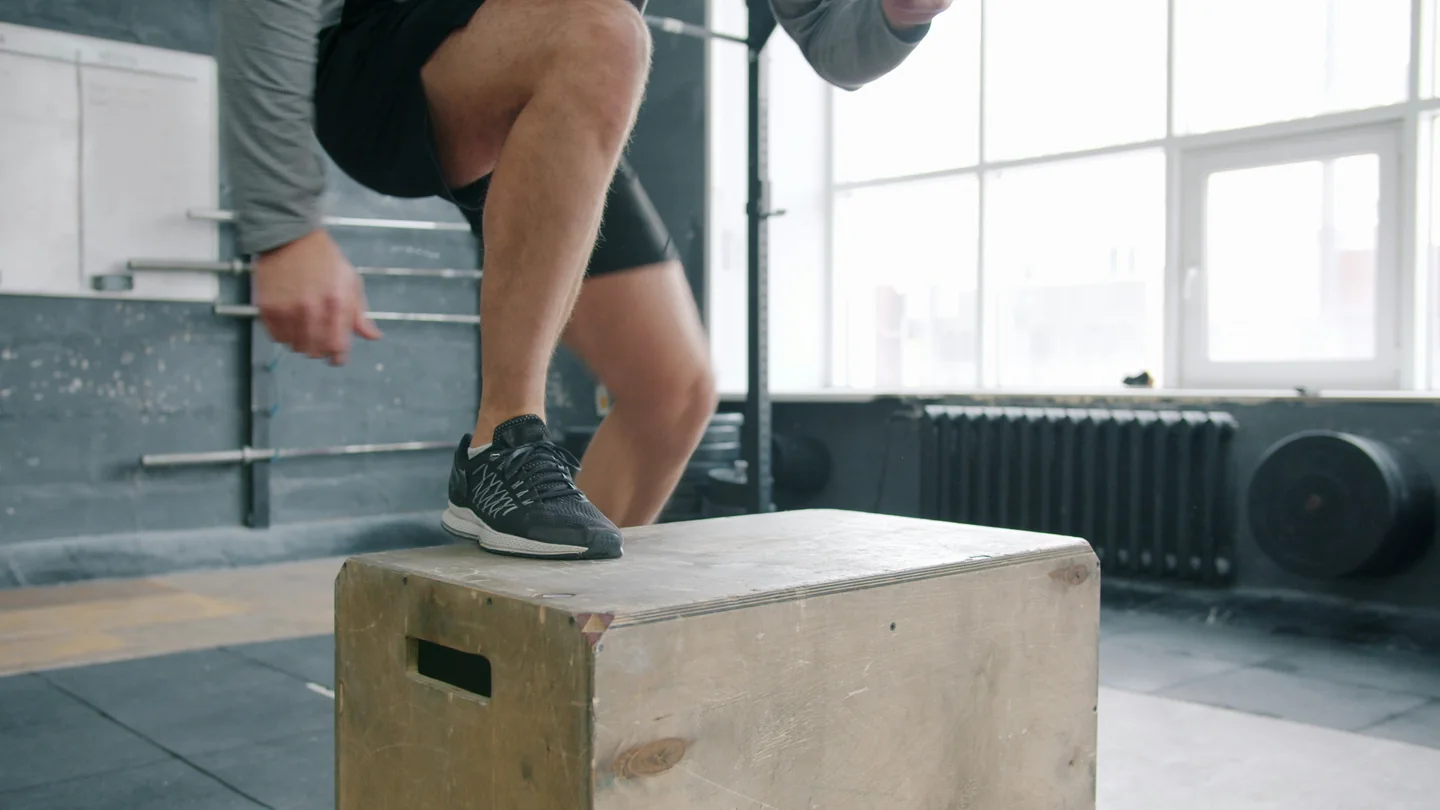
Knee pain that settles for a few days and returns on the stairs, during a squat or after a run can be difficult to make sense of. Rest may help temporarily, yet the same problem reappears when you resume your usual routine.
Persistent pain does not always mean continuing structural damage. Symptoms can reflect the interaction between tissue irritation, repeated loading, physical capacity, previous injury and the sensitivity of the pain system. Sleep, stress and confidence in activity can also influence the experience of persistent pain. None of this makes the pain less real. 9
The useful question is not simply which exercise to try. It is what your knee currently tolerates, what you need it to do, and whether there are symptoms that require assessment first.
Where is your knee pain?
Location helps a clinician decide what to examine, but it cannot establish a diagnosis. Describe the area as precisely as you can, alongside what brings on the pain, any swelling and whether an injury preceded it.
At the front, around or behind the kneecap
Anterior knee pain means pain at the front of the knee. Discomfort around or behind the kneecap during squats, running or stairs can occur in patellofemoral pain, but this pattern is not exclusive to that condition. 2
Around the patellar tendon
The patellar tendon connects the lower part of the kneecap to the shin bone. More localised pain here, particularly with jumping or other demanding activity, may lead a clinician to assess the tendon. Tenderness alone cannot confirm tendinopathy. 7
On the inner or outer side
Medial means the inner side of the knee; lateral means the outer side. Note whether discomfort is along the joint line or in the surrounding tissues. Several structures occupy these areas, so pointing to one side does not identify a meniscal injury or another specific cause.
At the back of the knee
Posterior discomfort can involve the joint or nearby tissues. A new lump, substantial swelling or associated calf symptoms should be described during assessment, rather than assumed to be a muscle that simply needs stretching.
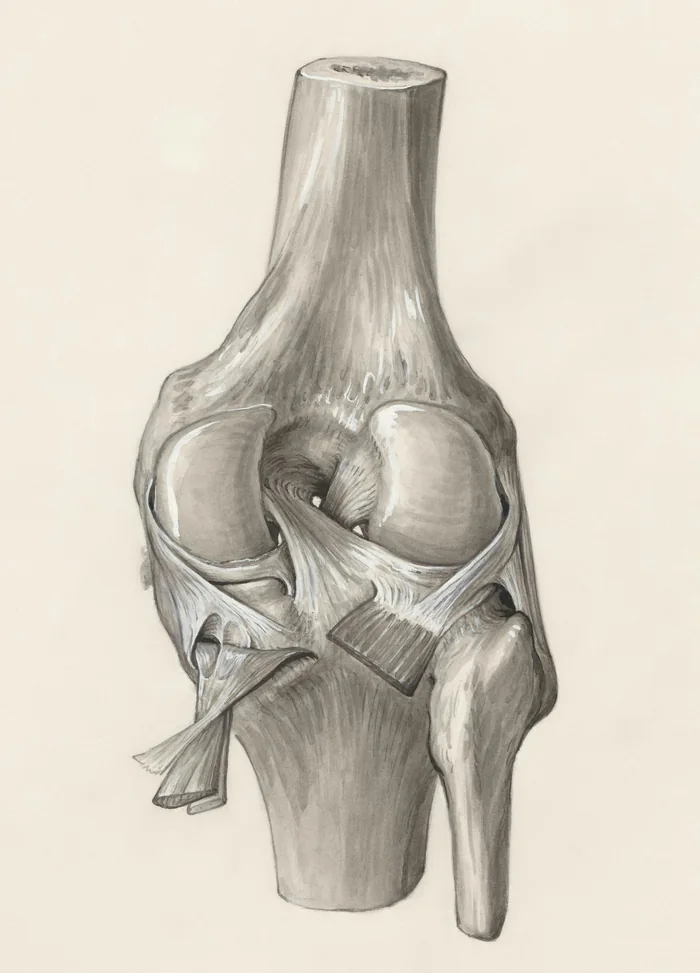
The anatomical image shows the knee with superficial tissues moved aside to reveal internal structures. It provides context, not a self-diagnosis map.
Common reasons knee pain may persist
These are examples of presentations a clinician may consider, not a checklist for deciding which condition you have. More than one factor can contribute to symptoms.
Patellofemoral pain
Pain around or behind the kneecap often becomes noticeable with knee-loading tasks such as squatting, going up or down stairs and running. There may be a mismatch between recent demands and current tolerance, but this does not mean everyone has weak muscles or incorrect alignment.
Assessment considers the individual pattern and response to loading. Education and knee-targeted exercise are central to management, with hip exercise or other supporting approaches selected where appropriate. 1, 2
Patellar tendinopathy
This involves tendon-related pain and reduced tolerance to loading, often noticeable in jumping, running or repeated high-force efforts. It is different from pain centred around the kneecap, although symptoms can overlap.
Temporarily reducing demanding tendon loads may help settle symptoms, but rehabilitation usually also needs a progressive strengthening and activity plan. Findings from tendon studies should not be applied automatically to every painful knee. 4, 6
Knee osteoarthritis
Osteoarthritis can involve activity-related pain, stiffness and reduced function. It is not an inevitable outcome of getting older, and an X-ray does not by itself explain how much pain or difficulty someone experiences.
NICE advises that management should follow symptoms and physical function. Tailored strengthening and aerobic exercise are core options, with other support considered according to the person's needs. Typical osteoarthritis can often be assessed without routine imaging. 3
Meniscal or other joint-related conditions
Meniscal problems can follow a twist or a more gradual change and may involve pain, swelling or difficulty bending and straightening. Similar symptoms occur with other joint problems, so an examination matters more than a symptom label.
A knee that is genuinely stuck and cannot straighten needs prompt medical assessment. Painless clicking alone is different from mechanical locking. Imaging may be appropriate when the history and examination suggest it would change management. 5, 8
Previous injury and incomplete recovery
Pain settling does not necessarily mean strength, confidence or sporting capacity have returned. Rehabilitation may have stopped before the knee was prepared for the loads of a full working day, repeated stairs or training.
This is not a judgement about effort. Access to support, an unclear progression plan and difficulty fitting rehabilitation into everyday life can all affect what is achievable. A review can identify what remains limited rather than simply repeating the same exercises.
Why resting doesn't always resolve knee pain
Reducing an aggravating activity can ease symptoms without restoring the ability to tolerate it. Prolonged inactivity can also leave a person less prepared for their usual demands. At the other extreme, repeatedly pushing through substantial worsening may keep symptoms difficult to manage.
For persistent, assessed symptoms, activity modification may mean a shorter run, fewer steep hills, a shallower squat or fewer jumping sessions. A tolerable alternative, such as a short walk or comfortable cycling, may help maintain activity. The right choice depends on the presentation; there is no obligation to continue an activity that reliably worsens symptoms. 1, 3, 7
Change one demand at a time where practical and notice the response later that day and the next morning. Pain after exercise can be useful feedback, but delayed soreness does not identify a diagnosis or prove new damage.
A recent significant injury, a hot swollen knee or inability to bear weight requires medical advice before trying to exercise through it. Guidance for persistent knee pain is not a substitute for acute-injury care. 5, 8
What actually helps persistent knee pain improve?
Meaningful rehabilitation links an exercise to a specific need: producing more force, tolerating stairs, controlling a landing or returning to running. The categories below are options that can overlap, not five compulsory stages.
Educational examples, not a personal programme
The suggested doses are illustrative programming choices, not exact protocols taken from the cited research. They are not a recommendation to perform every exercise. Diagnosis, symptom irritability, other health conditions and current function should guide selection. Have concerning symptoms assessed before attempting them.
A. Isometric loading
An isometric exercise holds a position while the muscles work. Examples include a supported, shallow wall sit or holding a knee-extension position against suitable resistance. These can offer a manageable way to challenge the quadriceps when repeated knee movement is less comfortable.
A supported Spanish squat is another option used in patellar tendon rehabilitation. It uses a securely anchored strap behind the knees while the person holds a squat position. It is best introduced with professional instruction and appropriate equipment; it is not an essential exercise or a universal starting point. 7
Illustrative dose: 3–5 holds of 20–45 seconds, resting between holds. A shorter hold, less knee bend or lighter resistance may be more appropriate initially.
Some people notice short-term symptom relief, but it is not guaranteed. A 2021 review found no clear advantage of isometric over isotonic exercise for immediate pain relief in patellar tendinopathy, with low-certainty evidence. That finding does not establish an analgesic effect for every person or every knee condition. 4
B. Quadriceps and knee-targeted strengthening
Sit-to-stands from a stable chair, controlled squats, low step-ups and resisted knee extensions offer different ways to challenge the front-of-thigh muscles. A supported split squat can introduce more demand through one leg when appropriate. These options can help build capacity for tasks such as getting up, walking and using stairs. 2, 3
For a sit-to-stand, rise from the chair and lower yourself with control. A higher seat or hand support can reduce the demand. For step-ups, begin with a low, stable step and use a rail if needed. Increase step height only when the current task is well tolerated.
Illustrative dose: 2 sets of 8–12 controlled repetitions of one suitable exercise, with recovery between sets. This is a starting example, not a minimum target to push through.
For an irritable knee, reducing squat depth or choosing a tolerable knee-extension range may help. Neither a deep squat nor a particular knee angle is universally required or prohibited. Both weight-bearing and seated exercise can be useful for patellofemoral pain; selection should follow the response. 2
C. Hip-targeted strengthening
Side-lying hip abduction involves lifting the upper leg while keeping the pelvis reasonably steady. Banded lateral steps add resistance to sideways stepping. A supported single-leg sit-to-stand or another suitable single-leg variation can later combine hip and knee demands.
Hip exercise can complement knee-targeted work in patellofemoral pain. It may also offer an initial option when loaded knee bending is poorly tolerated. This does not mean all knee pain originates from weak glutes, or that every visible variation in alignment needs correcting. 1, 2
Illustrative dose: 2 sets of 10–15 side-lying repetitions, or 2 short sets of 8–12 controlled sideways steps in each direction. Choose one appropriate option and adjust resistance rather than forcing the full number.
D. Progressive resistance
Weighted squats, leg press, loaded knee extensions and progressively loaded split squats can provide a greater strength challenge once the chosen exercise is manageable. Resistance might come from a small dumbbell, a machine or another load that can be adjusted precisely.
For patellar tendinopathy, progressive resistance helps prepare the tendon and quadriceps for greater demands. A trial of a staged tendon-loading programme supports this approach in that condition, not as a standard prescription for all knee pain. 6
Illustrative progression: build from 2–3 sets of 8–12 controlled repetitions towards 3 sets of 6–10 with a heavier load where appropriate. Keep sufficient recovery between sets and between demanding sessions. No single repetition range is best for everyone.
For osteoarthritis, a useful resistance may remain relatively modest. The goal is an appropriate challenge and sustained participation, not reaching a heavy-load benchmark. Some discomfort can occur when starting therapeutic exercise, but significant swelling, deteriorating function or sustained worsening calls for review. 3
For knee osteoarthritis, appropriate aerobic activity can complement strengthening. Options may include walking, stationary cycling or suitable aquatic exercise, adjusted to individual needs and tolerance. NICE recommends tailored therapeutic exercise, including strengthening and general aerobic fitness; the type, duration and intensity should suit the person rather than follow a universal prescription. 3
E. Plyometric and return-to-sport loading
Small two-legged hops and controlled landing exercises introduce quicker loading than slow strengthening. Later options may include single-leg hopping, running drills and changes of direction relevant to the person's sport.
These exercises are most relevant when the goal involves running, jumping or rapid stopping. They are not a universal treatment for knee pain. A person needs sufficient strength, control and tolerance of their existing activity before adding them. 6
Illustrative introduction: 2 sets of 8–10 small bilateral hops, with recovery, in an appropriately assessed person. Progress height, repetitions, speed or single-leg demand separately, based on the response.
Being able to finish a set does not establish readiness for an unrestricted training session. Return-to-sport decisions also consider repeat efforts, fatigue, symptoms afterwards and confidence in the required task.
Adjust the demand, not just the exercise name
Range: use a higher chair, shallower squat or smaller step if necessary, then gradually explore more range when appropriate.
Resistance: choose a load that allows controlled execution; increase it in small increments as the current challenge becomes manageable.
Volume and frequency: fewer repetitions or shorter holds can be a useful starting point. An illustrative strength schedule might be two or three sessions a week, but the appropriate frequency varies and should account for work, running and other activity.
Recovery: allow rest between sets and space demanding sessions according to the response. Repeating heavy exercise or jumping every day is not a requirement.
Symptoms: review pain, swelling and function during the session, afterwards and the next day. A sustained deterioration is a reason to reduce or reconsider the demand, not to chase a target dose.
When is knee pain a reason to seek assessment?
Arrange an assessment if symptoms persist for several weeks, repeatedly return or are worsening, particularly when they limit walking, stairs, work, sleep or sport. You do not need to wait until you have tried every exercise. 5, 8
An assessment can explore the history, swelling, range, strength and response to functional tasks, and consider whether another explanation or further investigation needs attention.
How should rehabilitation progress?
Progress is broader than a lower pain score. Useful signs may include:
- More comfortable walking, stairs or repeated sit-to-stands.
- Improved strength or the ability to manage a gradually increased resistance.
- Better knee range without increasing swelling or restriction.
- Greater confidence and control in the activities that matter to you.
- A more settled response later that day and the following morning.
- Increasing tolerance of your desired activity over repeated sessions.
For a runner, a first goal might be tolerating a short, easy exposure before adding duration, speed or hills. For someone whose priority is daily life, getting up from a chair and managing stairs may be more relevant than hopping. These are different goals, not different levels of success.
There is no universal pain-score threshold or fixed recovery timetable that clears every knee for progression. If a small increase produces sustained worsening, return to a more manageable demand and review the plan. Persistent swelling, loss of function or an unexpected change in symptoms warrants reassessment.
A more informed approach to knee pain
Persistent knee pain does not automatically mean that exercise is harmful, that you have trained incorrectly or that your knee is permanently damaged. It does mean that repeating an approach that is not helping deserves a closer look.
A useful plan brings together a plausible clinical explanation, exercises matched to your current capacity, realistic activity adjustments and a way to judge progress. Strengthening may be part of that plan, but it is not the answer to every condition.
For individual support, explore how Ascension Sports Therapy approaches assessment and care.