

Understanding your symptoms
Achilles pain during or after a run can be frustrating, particularly when it develops without an obvious injury.
You might notice discomfort during your first few steps, stiffness the following morning or tenderness that becomes increasingly noticeable as your training continues.
One possible explanation is Achilles tendinopathy, a condition associated with pain and reduced tolerance to loading through the tendon.
However, not all pain at the back of the ankle is tendinopathy. Understanding the location and behaviour of your symptoms is an important starting point.
Why does your Achilles hurt when you run?
The Achilles tendon connects the calf muscle complex to the heel bone. It helps transmit force during walking, running and jumping.
Running repeatedly loads this structure. Tendons adapt to physical demands, but symptoms can develop when the loading demands exceed what an individual is currently able to tolerate.
Potential contributing factors include:
- Sudden changes in running distance or frequency.
- Introducing more hills, sprinting or speed sessions.
- Returning to running after an extended break.
- Changes in footwear, training surfaces or activity demands.
- Individual physical capacity and wider health factors.
These factors do not automatically cause injury.
Achilles pain also doesn't necessarily mean you've trained incorrectly. Symptoms may reflect an interaction between training demands, individual capacity and other contributing factors.
What does the timing of your pain tell you?
The timing of symptoms can provide useful information, although it cannot independently establish a diagnosis.
Pain during running
Some runners experience discomfort when they first begin running, which then settles as they continue.
This pattern can occur in Achilles tendinopathy, but feeling better once warmed up doesn't automatically mean the tendon is tolerating the session well.
Pain after running
You might complete your run relatively comfortably but notice soreness or stiffness later that day.
Pay attention to whether this response changes following longer, faster or more demanding sessions.
Pain and stiffness in the morning
Morning stiffness is commonly associated with Achilles tendinopathy.
The first few steps after getting out of bed may feel uncomfortable before movement becomes easier.
Changes in morning symptoms can help inform how you're responding to your current activity demands.
However, stiffness alone cannot confirm a diagnosis or determine whether it's appropriate to continue running.
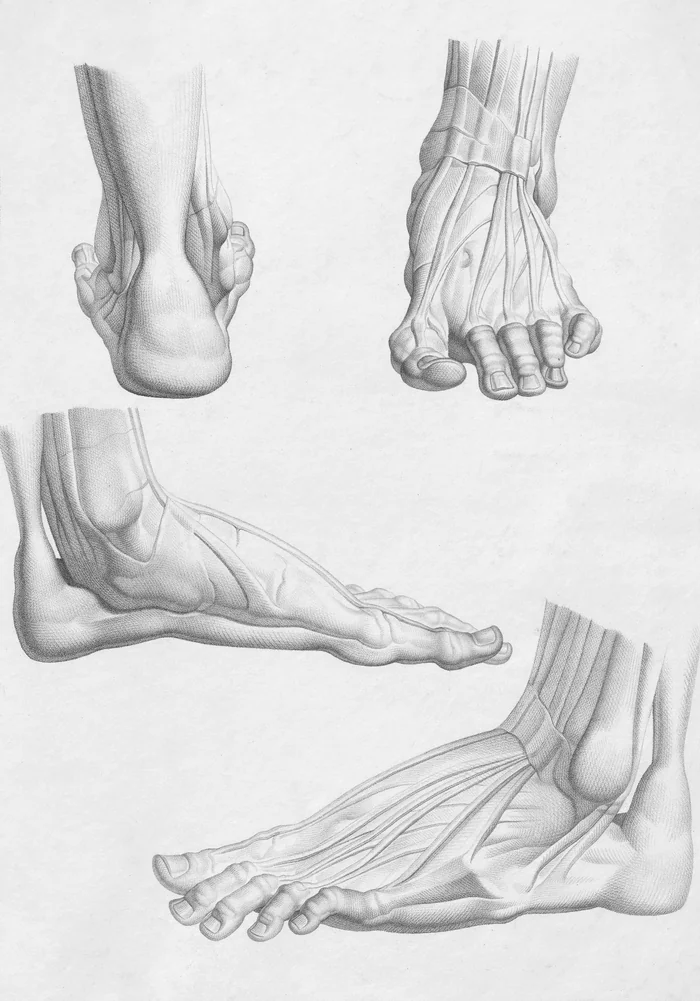
Where is your Achilles pain located?
Pain around the Achilles tendon doesn't always involve the same structures.
Two commonly recognised presentations are midportion and insertional Achilles tendinopathy.
Midportion Achilles tendinopathy
Pain is generally located in the main body of the tendon, typically a few centimetres above its attachment to the heel.
The area may feel tender or thickened, with symptoms commonly associated with repeated loading.
Insertional Achilles tendinopathy
Pain is located closer to where the tendon attaches to the heel bone.
This distinction is clinically important because greater ankle dorsiflexion can increase compression around the tendon attachment.
Some exercises and loading strategies may therefore need to be modified for people with insertional symptoms.
Other conditions, including irritation around the tendon, bursitis and tendon tears, can produce similar discomfort.
Pain location is useful information, but it should not be treated as a diagnosis on its own.
Should you stop running if your Achilles hurts?
Not necessarily.
However, continuing exactly as normal may not be appropriate either.
The decision depends on the severity of symptoms, your functional ability, the clinical presentation and your response to activity.
Some people may benefit from temporarily adjusting running volume or avoiding particularly demanding sessions while maintaining tolerable activity.
Useful considerations include:
- Reducing running distance or frequency where necessary.
- Temporarily modifying hills, sprinting and high-intensity sessions.
- Monitoring symptoms during and after running.
- Observing how symptoms behave the following morning.
- Avoiding activities that consistently produce a substantial worsening of symptoms.
Pain is only one part of the picture. Function, loading tolerance and symptom behaviour all matter.
If symptoms continue to worsen, you're changing how you walk or run because of pain, or daily activities are becoming difficult, a professional assessment is advisable.
What actually helps Achilles pain improve?
For appropriately diagnosed Achilles tendinopathy, progressive tendon-loading exercise is a central part of evidence-based rehabilitation. The 2024 guideline supports loading within individual tolerance for midportion symptoms; insertional symptoms need particular consideration of compression. 1, 2
The aim is to build capacity for everyday activity and running, alongside appropriate adjustments to training demands. The exercise categories below can overlap. They are not a fixed sequence or a programme that everyone should complete.
1. Isometric loading
An isometric contraction holds a position rather than repeatedly raising and lowering the heel. Examples include a supported standing calf-raise hold, using a stable support for balance, or a seated plantar-flexion hold, keeping the heel raised against suitable resistance.
Sustained contractions may provide a manageable way to load the calf and tendon when repeated movement is less tolerable. They are an option, not an essential first stage for everyone.
Illustrative starting approach: 3–5 holds of approximately 20–45 seconds, with rest between holds and the duration and resistance adjusted to individual tolerance.
Do not expect guaranteed immediate pain relief. Van der Vlist and colleagues found no immediate analgesic benefit from the isometric protocols tested in people with chronic midportion Achilles tendinopathy. This does not establish that isometrics have no role in rehabilitation. 7
2. Controlled isotonic strengthening
Here, the calf muscles work as the heel rises and lowers. Examples include standing calf raises with a relatively straight knee and seated calf raises with a bent knee, moving through a comfortable, controlled range.
Both positions load the calf–Achilles complex. A straighter knee allows greater gastrocnemius contribution. Bending the knee shortens this muscle across the knee and reduces its contribution, placing relatively more emphasis on the soleus. It does not isolate the soleus, which also works with a straight knee.
Using both legs can make loading more manageable. Progression towards a single-leg variation may be appropriate as strength and tolerance improve. External resistance, such as a dumbbell or weighted backpack, can then be introduced gradually while retaining control.
Illustrative starting approach: 2–3 sets of 8–12 controlled repetitions, with recovery between sets. Adjust the support, resistance and range rather than forcing completion of a target number.
3. Heavier resistance training
When lighter strengthening is well tolerated, weighted standing calf raises, loaded seated calf raises or calf raises on a leg press or other suitable gym equipment can provide a greater strength challenge.
The purpose is to develop higher calf muscle strength and tendon-loading capacity. Heavier resistance is a progression of strengthening, not a separate treatment that everyone must start immediately. 1, 6
Illustrative later progression: 3 sets of 6–10 repetitions with a suitably challenging resistance, allowing recovery between sets and between demanding sessions. Increase the load gradually according to function, technique and the response afterwards.
No single repetition range or loading protocol is universally superior. The appropriate load and recovery depend on the individual, including their running and other activity demands.
4. Plyometric and energy-storage loading
Running involves rapid storage and release of energy through the calf–Achilles complex. Small bilateral pogo hops and controlled two-legged hopping can introduce faster loading, with progression towards single-leg hopping and running-specific drills where appropriate. 6
Jumping is not an appropriate starting point for everyone. Sufficient calf strength, functional control and tolerance of existing activity are needed before introducing it; being able to complete slow calf raises alone does not establish readiness.
Illustrative introduction: 2 sets of 10 low-amplitude bilateral hops in an appropriately assessed individual, with recovery between sets. Subsequent changes in volume, speed or single-leg demand should follow the response, rather than a fixed timetable.
Let the response guide progression
Consider symptoms during exercise, later that day and the following morning alongside strength, walking ability and other function. Increasing morning stiffness or pain, reduced function or a sustained worsening after sessions may mean that the load, range, volume or recovery needs adjusting.
There is no single pain score that establishes safety for everyone. Allow recovery between demanding sessions and consider total load from exercise and running together. If symptoms keep worsening or the response is unclear, seek assessment before progressing.
When should you seek professional help?
Consider an assessment if your Achilles symptoms:
- Keep returning during running.
- Are progressively worsening.
- Persist despite appropriate activity adjustments.
- Interfere with walking, exercise or normal activities.
- Are associated with noticeable weakness or persistent swelling.
Seek urgent medical assessment if you experience a sudden snap or popping sensation, acute severe pain, marked weakness or difficulty walking or pushing off through the affected foot.
These symptoms may indicate an Achilles tendon rupture or another significant injury.
New, unexplained calf swelling, warmth or redness also warrants prompt medical attention because conditions other than tendon injury may need to be excluded.
A clinician can assess your symptoms, loading history, physical capacity and functional limitations, consider alternative explanations and decide whether further investigation is needed.
Imaging isn't always necessary for typical Achilles tendinopathy, but may be appropriate when the diagnosis is uncertain or recovery isn't progressing as expected.
A more informed approach to Achilles pain
Achilles pain isn't always a reason to stop exercising completely, but it shouldn't be ignored simply because you're still able to run.
Understanding the location of your discomfort, its response to activity and your current training demands creates a more informed starting point.
At Ascension Sports Therapy, assessments consider your presenting symptoms, movement, physical capacity and individual goals to help establish an appropriate way forward.
Experiencing persistent Achilles pain?